CHAPTER XLII
THE ESSENTIALS OF A MUSIC LIBRARY*
* Contributed by Frank H. Marling.
At the outset of this chapter the reader is earnestly urged to form a personal music lirary of his own. It is often advisable and, indeed, necessary to consult books in a public library, but there are a pleasure and satisfaction in having one’s own books which are well worth the necessary outlay or sacrifice, and such purchases constitute an investment which will yield abundant interest. To have books on one’s own shelves for reading or consultation at any time not only gives them a great added interest but creates a sense of ownership and affectionate regard for the volumes which is an invaluable stimulus to the student and is not likely to be fostered in any other way.
In making such a collection it is well to bear in mind that it is not necessary to buy a lot of books at one time, but that it is better to build it up by degrees and to ascertain carefully just what is likely to be permanently useful. Several well-chosen books added each year at a comparatively small cost will result in course of time in the formation of a library which will be a constant source of delight and practical service.
The suggestions herein made are far from exhaustive or inclusive of all phases of the art, as to cover its literature adequately would require a whole volume. The endeavour has been made, however, to give some helpful hints and suggestions in an attractive field of study. For convenience of reference, and following the natural sequence of the varied interests of the reader, the material has been grouped under various divisions, making the information more easily accessible. By this method the special student in any form of music is able to find particulars regarding books in his own department. The publisher and price have been mentioned in each case, as it is believed that these practical details will greatly assist the reader in his choice. Care has been taken to include only volumes in print (with rare exceptions, as indicated) so that those recommended should be procured without much difficulty. It has been the aim of the compiler to mention only works of genuine worth, though, for lack of space, some excellent books have had to go unrecorded. It is also deemed wise to confine the list to works in the English language, as in this way the needs of the great majority of readers will be met, and to go into foreign literature would open a field impossible to cover within the prescribed limits. For the same reason there have been included very few of the numerous works on method and technic.
Works of Reference
An almost indispensable work in a musical library of any completeness is Grove’s Dictionary of Music and Musicians (five vols., $25, Macmillan). A new and revised edition has recently appeared, devoting special attention to American music and bringing the information generally down to date. It is without an equal in the English language for a comprehensive and scholarly treatment of all branches of the art, and forms an invaluable storehouse of facts on musical matters of all kinds.
Of special value are its critical and scientific articles and its monographs on the great composers, written by specialists. Its possession will obviate the necessity of purchasing many smaller and more fragmentary works.
Another reference work is Famous Composers and Their Works, by J. K. Paine and others (six vols., $24, J. B. Millet Company), a work of unusual charm and interest, covering the whole field of music and treating all schools and nationalities in a fascinating way. The chapters are the work of different American, English, and foreign noted critics, each full of enthusiasm for his theme. A distinctive feature is its wealth of illustrative matter of all kinds.
For those who cannot afford such expensive works there is an excellent one-volume (Riemann’s) Dictionary of Music ($4.50, Presser), by the well-known German critic and writer, which gives the most essential information in concise and accurate form.
The Musical Guide, by Rupert Hughes ($1.50, Doubleday. Page & Company), is a one-volume work constituting a multum in parvo on musical lines, containing, as it does, a pronouncing and defining dictionary of terms and instruments, with a key to the pronunciation of sixteen languages and a pronouncing biographical dictionary.
Admirable, also, are the two dictionaries by Theodore Baker, Biographical Dictionary of Musicians ($3.50, Schirmer) and Dictionary of Musical Terms ($1, Schirmer), both being models of authoritative and condensed statement.
Another useful book is Lavignac’s Music and Musicians ($1.75, Holt), which includes a large variety of invaluable facts about the technical side of music and some chapters on American and European composers.
A handy series of reference books on music is the Music Story Series (thirteen vols., each $1.25, Scribners). These embrace a wide range of historical research and comprise musical form, notation, the carol, minstrelsy, the violin, organ, etc. The student can obtain in them much detailed knowledge in any special department for which the ordinary musical dictionary has no room, and the numerous illustrations are of additional value. One of the first books to present music as a language was Music Explained to the World by F. J. Fétis ($1.50, Ditson). This was the forerunner of a number of volumes that have attempted to bring the message of music to the seeker after culture.
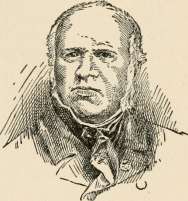
F. J. FÉTIS
Histories of Music
The most scholarly and comprehensive history of music in print is doubtless the Oxford History of Music (six vols., 8vo, $30, Oxford University Press), though its size and price and severely critical and technical form make it unavailable for most students.
The old histories of Burney and Hawkins, though full of antiquarian interest to the lover of old times, are, of course, now entirely out of date and lack in modern scientific authority.
The General History of Music, by W. S. Rockstro ($3.50, Scribners), is by an accomplished English musical writer and contributor to Grove’s Dictionary. It is in the main accurate and fair though somewhat lacking in appreciation of the modern schools.
Professor Waldo S. Pratt’s History of Music ($3, Schirmer) is to be commended for its skilful condensation of its vast array of materials, having been well characterised as “a sort of combined history and biographical dictionary and a minute and scholarly treatise.”
An invaluable summary of musical history for the guidance of students is the Study of the History of Music, by Edward Dickinson, the well-known professor of musical history at Oberlin University ($2.50, Scribners). The story is told in clear, outline form, and a feature of exceptional usefulness is the very full references to musical literature for further study throughout every section and chapter.
A smaller work is Hunt’s Concise History of Music ($1, Scribners), an old favourite packed full of the essential details and dates in abbreviated form.
More recent works, each of which has found acceptance with students, are Hamilton’s Outlines of Music History ($1.50, Ditson) and Mathews’ Popular History of Music ($2, Mathews’ Publishing Company).
The History of Music, by J. F. Rowbotham ($2.50, Scribners), comes down only to the time of the troubadours, but is specially explicit on ancient and mediaeval music.
The English composer C. H. H. Parry is also an accomplished writer. His Evolution of the Art of Music ($1.75, Appleton) is described by a competent judge as “a series of thoroughly admirable essays, scientific in spirit, and sound.”
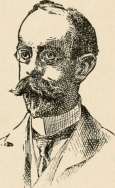
EDWARD DICKINSON
Histories of Modern Music
A timely book in this sphere is Modern Composers of Europe, by Arthur Elson ($2, L. C. Page & Company), which gives an account in moderate compass of the noted composers of all schools of the day, about whom it is often difficult to get definite information.
Other studies dealing, with intelligence and acumen, with the very latest writers are Oilman’s Phases of Modern Music ($1.25, John Lane Company), and The Music of To-Morrow and Other Studies ($1.25, John Lane Company), by the same author, treating of Debussy, Richard Strauss, and others.
Masters of Italian Music, by R. A. Streatfeild ($1.75, Scribners) presents an interesting interpretation of Italian contemporary composers.
History of National Music and Folk-Lore
Primitive Music, by A. Wallaschek ($4.50, Longmans), is a comprehensive and learned review of the origin and development of the music, songs, instruments, and dances of the savage races.
Carl Engel’s Study of National Music (out of print) and his Literature of National Music ($2, Novello), also Music of the Most Ancient Nations ($3.50, Reeves), embody the matured convictions of a patient and thorough investigator of historical sources.
The National Music of the World, by H. F. Chorley ($1.50, Reeves), a noted London music critic, is probably the most readable and popular account for the general reader.
H. E. Krehbiel’s Afro-American Folk Songs ($2, Schirmer) is a study in racial and national music, the outcome of many years of patient and loving labour, and forms a pioneer work on this theme which is handled with Mr. Krehbiel’s acknowledged originality and ample scholarship.
History of Music in America
The most considerable work in this department is History of American Music, by L. C. Elson ($5, Macmillan), an ample volume crowded with illustrations and treating a difficult subject with sympathy and impartiality; readable in style and forming, on the whole, the most complete all-around review extant of our country’s musical institutions and men.
One Hundred Years of Music in America, edited by W. S. B. Mathews ($3, Presser), is a thick octavo volume with much detailed information of native musicians though not possessing large critical or discriminating value.
Famous American Composers, by Rupert Hughes ($1.50, L. C. Page & Company), is to be noted for its enthusiasm, vivacity, and intimate acquaintance with the compositions of our countrymen, particularly those of the present time.
In Famous Composers and Their Works, mentioned before, Mr. Krehbiel has a chapter on American composers giving a fair and trustworthy estimate of their achievements, and the same writer has some valuable comments on the same topic in the appendix to Lavignac’s Music and Musicians ($1.75, Holt).
Biographical Works
We must first chronicle some general biographical series, the most recent of which is Masters of Music, edited by F. J. Crowest (twelve vols., each $1.25, Dutton). This covers satisfactorily nearly all the great composers, who have been intrusted to competent hands that have made workmanlike use of their materials. In size, illustrations, and form they are all most attractive.
A similar series of able monographs by British writers, called The Great Musicians edited by Francis Hueffer (ten vols., each $1, Scribners), have been on the market for many years, being pioneer works in this field, and have recently been reissued in improved form.
Another compilation is the George T. Ferris Series of Music Biographies (five vols., each $1, Appleton), a most engaging little set, including the great German, Italian, and French masters as well as the great singers, violinists, and pianists. They are extremely readable and abound in apt anecdote and vivacious description.
Not to be overlooked is the series Living Masters in Music, edited by Rosa Newmarch (ten vols., each $1, John Lane Company), of special timeliness for its very full accounts of contemporary musicians, in which the student will find most interesting particulars about such “moderns” as Debussy, Leschetizky, Paderewski, Puccini, Richard Strauss, and others. We would also include in this connection, the invaluable set of Famous Composers and Their Works, with its ample chapters on musicians, and Baker’s Biographical Dictionary of Musicians, both mentioned before.
Many students will have to begin their biographical study with a work grouping the lives of the greatest composers in one volume.
We quote as serviceable examples of this class A Score of Famous Composers, by N. H. Dole (75 cents, Crowell); Makers of Music, by H. F. Sharp ($1.75, Scribners); Standard Musical Biographies, by George P. Upton ($1.75, McClurg).
Lives of Individual Composers
Philip Spitta on J. S. Bach, the monumental Life of Bach, by Philip Spitta (three vols., $15, Novello), is a wonderful example of German accuracy and profundity and the final authority on all matters connected with the composer, though beyond both the purse and the time of the average reader.
A thoroughly competent life in more moderate compass is the Life of Bach, by C. H. H. Parry, the English composer ($3.50, Putnams).
Smaller compendiums, each adequate so far as their scope admits, are Life of Bach, by Stanley Lane Poole ($1, Scribners), and Life of Bach, by Abdy Williams ($1.25, Dutton).
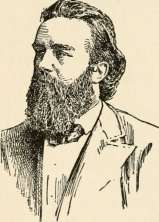
The magnum opus in Beethoven Literature Is Thayer’s Life of Beethoven in several volumes, a remarkably comprehensive work originally published in German, of which an English translation by Mr. H. E. Krehbiel will shortly be issued by the Scribners, It will doubtless be the final court of resort on Beethoven for years to come.
Another account is by Schindler and Moscheles ($1.50, Ditson), both personal friends, which contains first-hand information. There are also shorter sketches by Crow-est ($1.25, Dutton), and by H. A. Rudall ($1, Scribners).
The romantic career of Chopin has been told with painstaking detail by Professor Niecks in his Life of Chopin (two vols., $10, Novello), but the most brilliant account is found in Chopin, the Man and His Music, by James Huneker ($2, Scribners), in which this accomplished critic tells the story and expounds his compositions in his inimitable and fascinating style.
Liszt’s Life of Chopin ($1.25, Ditson) is more an aesthetic essay than a biography, though interesting for his interpretation of the composer’s character and ideals.
Brahms has been commemorated at length in Florence May’s Life of Brahms (two vols., $7, Longmans), and by J. A. Fuller-Maitland, a careful English writer, in a volume of the New Library of Music Series ($2.50, John Lane Company).
Probably the most modern and scientific account of Handel is Life of Handel, by R. A. Streatfeild ($2.50, John Lane Company).
In smaller compass and good of their kind are Mrs. Julia Marshall’s Handel ($1, Scribners) and Abdy Williams’s Handel ($1.25, Dutton).
There is no extended life of Haydn in English, but J. Cuthbert Hadden’s monograph in the Master Musician Series ($1.25, Dutton) is trustworthy, and there is a still smaller book by Ludwig Nohl (75 cents, McClurg).
The Life of Liszt has been done in a most picturesque and illuminating way by James G. Huneker ($2, Scribners).
The Mendelssohn literature is quite extensive. His interesting letters (two vols., each $1.25, Ditson) and letters to Moscheles ($3, Houghton, Mifflin & Co.) can be cited. There are a number of sketches and reminiscences of Mendelssohn of more or less value, such as the volume by Lampadius ($1.25, Ditson) with valuable recollections by his friends.
The Mendelssohn Family, by Hensel (two vols., $5, Harpers), is of special interest for the light it throws on his education and family life.
The article by Sir George Grove in his Dictionary is excellent for its enthusiastic appreciation and characterisation. One of the most impartial and critically helpful short works is the Life, by Stratton in the Master Musician Series ($1.25, Dutton).
Mozart has been honoured in the great and scholarly work by the accomplished Otto Jahn (three vols., $15, Novello), described by a leading musician as “in many respects the most perfect specimen of critical biographical writing in the whole field of music history,” though its great bulk and enormous mass of detail necessarily limit its availability.
Valuable additional works are Mozart, by W. H. Hadow ($2.50, John Lane Company), Gehring’s Life of Mozart ($1, Scribners), and Breakespeare’s Life of Mozart ($1.25, Dutton), any of which will supply the necessary facts for the general reader.
It is a singular fact that no adequate life of Schumann has appeared in English, but one of the best existing is that by Reissmann ($1, Macmillan).
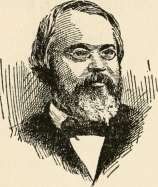
OTTO JAHN
In more abridged form are Fuller-Maitland’s Life of Schumann ($1, Scribners), and Wasielewski s Life of Schumann ($1.25, Ditson).
The most complete work in English on the life and career of Franz Schubert was written by Kreissler von Hellborn in two octavo volumes, issued in London in 1869 and now out of print, though possibly available in second-hand condition occasionally.
An admirable account is also contained in Sir George Grove’s article in his Dictionary of Music, and there is a compact smaller life by E. Duncan in the Master Musician Series ($1.25, Dutton).
The son of Weber, Max Weber, has written an excellent critical biography of his father (two vols., $2.50, Ditson), and Sir Julius Benedict’s monograph in the Great Musician Series ($1, Scribners) has the merit of being written by a friend and pupil who was himself an able musician.
The Wagner literature is extremely voluminous, and it is impossible to mention a tithe of the biographical material. One of the most satisfactory lives is Henry T. Finck’s Life of Wagner (two vols., $4, Scribners), noteworthy for its clearness, picturesqueness, vigour, and variety.
Another important volume is W. J. Henderson’s Life of Wagner ($1.50, Putnam).
The monumental work by Glasenapp and Ellis, of which six octavo volumes (each $6, Paul Trench & Co.) have been issued, is splendidly written, though too voluminous for general use.
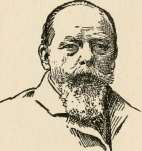
Carl Glasenapp
More within the needs of most persons are two biographies of high critical merit—one by Ernest Newman ($3.50, Dutton) and a more recent issue by J. F. Runciman ($3.50, Macmillan).
Two short lives, each worthy of chronicle, are Life of Wagner, by C. A. Lidgey ($1.25, Dutton), and Life of Wagner, by Francis Hueffer ($1, Scribners).
Wagner’s own autobiography is, of course, of high importance (two vols., $8.50, Dodd, Mead & Company), but has not yet appeared in a popular edition. His correspondence and letters cover a number of volumes, the most outstanding of which are the celebrated Wagner-Liszt Correspondence (two vols., $5, Scribners) and his famous Letters to Mathilde Wesendonck ($4, Scribners).
Critical Works
Books of Essays, Appreciation, Handbooks, etc.
The pioneer work in the literature of musical appreciation was undoubtedly How to Understand Music, by the veteran New York critic, Henry E. Krehbiel ($1.25, Scribners), and though it has had many competitors since it appeared, it has probably not been surpassed for general acceptability by the American musical public, whose needs it has most successfully met.
Of a different class, but of much value to the student and music lover, are George P. Upton’s skilfully compiled and well-illustrated series of handbooks, The Standard Operas ($1.75, McClurg), The Standard Concert Guide—to symphonies, cantatas, oratorios, etc. ($1.75, McClurg), The Standard Concert Repertory—of the minor compositions and musical forms ($1.75, McClurg). All these have been tried and tested and pronounced trustworthy worthy for their compact marshalling of information constantly needed in reading and studying musical works.
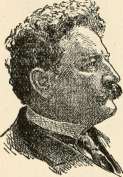
Henry E. Krehbiel
Among such works there must not be omitted the mention of Sir George Grove’s Beethovens Nine Symphonies ($1, Novello), one of the best books of musical appreciation ever written.
And also Philip H. Goepp’s Symphonies and Their Meanings (three vols., each $2, Lippincott), a work full of stimulus and inspiration.
Stories of Symphonic Music, by Lawrence Gilman ($1.25, Harpers), is an indispensable guide to the understanding of symphonies new and old.
The Story of Chamber-Music, by N. Kilburn in the New Music Library Series ($1.25, Scribners), is the only volume in English devoted entirely to this subject and gives detailed accounts of chamber compositions with analyses and numerous examples, illustrations, and portraits.
Mr. W. J. Henderson, among other creditable musical achievements, has written an excellent monograph, entitled What Is Good Music ($1, Scribners), full of suggestive instruction for the numerous class who desire to cultivate a taste in musical art and is marked by its brevity, sturdy common sense, and well-compacted information. Other works of Mr. Henderson, with valuable material, are The Story of Music ($1, Longmans) and Preludes and Studies ($1, Longmans).
A more recent writer, Daniel Gregory Mason, in his volumes, A Guide to Music for Young People and Other Beginners ($1.50, Doubleday, Page & Company), The Orchestral Instruments and What They Do ($1.50, Double-day, Page & Company), and The Appreciation of Music (with T. W. Surette) ($1.50, Doubleday, Page & Company) has revealed unusual gifts of clear statement and literary-skill in popular exposition. The same author has also brought out some fresh and suggestive critical studies of the old and new composers, issued by the Macmillans, From Grieg to Brahms ($1.75), The Romantic Composers ($1.75), Beethoven and His Forerunners ($1.75).
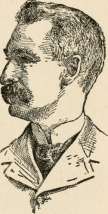
W. J. HENDERSON
One of the most pungent, original, and distinctive of all our American writers is James Huneker, whose brilliantly written volumes have won for him a high place in the musical world, both here and abroad. His books, Overtones ($1.25, Scribners), Mezzotints in Modern Music ($1.50, Scribners), and also his lives of Chopin and Liszt, mentioned elsewhere, all reveal the author’s contagious enthusiasm, breadth of knowledge, and wide catholicity of taste, especially in the interpretation of the modern school, of which he is a specially gifted exponent.
The Education of the Music Lover ($1.50, Scribners) is by Professor Edward Dickinson, who calls it “a book for those who study or teach the art of listening.” By it he places both professional and amateur readers in his debt by his rare faculty of writing about music in a vitalising way. He is eminently fair-minded and his liberally broad scholarship makes him an admirable leader in the formation of intelligent judgment in musical affairs.
Henry T. Finck, for many years in the forefront of American musical circles as critic of the New York Evening Post, has issued a volume the title of which is Success in Music and How It Is Won ($1.25, Scribners), which should be in the hands of all professional musicians, as he there describes in a very readable and attractive way how the world’s greatest singers, pianists, and teachers have made their way. His practical hints on a professional musical career cannot fail to be most invaluable to those pursuing music as a profession.
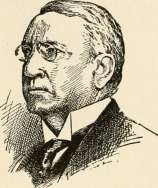
JAMES HUNEKER
The composer Schumann’s critical essays, collected under the title of Music and Musicians (two vols., $7.50, Reeves), are unique in musical literature as evidencing the union in one personality of great creative power with rare critical acumen and abound in incisive thoughts and pithy sayings.
The lectures of our own E. A. Macdowell, delivered while professor of music at Columbia University and gathered together under the title of Critical and Historical Essays ($1.50, Schmidt), have also a peculiar value and interest on account of his remarkable gifts as a composer.
Music and Poetry, by Sidney Lanier ($1.50, Scribners), gifted poet and musician, is a clear and engaging outline of important aspects of musical criticism, full of delicate analysis, educated enthusiasm, and feeling.
Purity in Music, by J. F. Thibaut ($1.25, Reeves), is a classic in criticism, especially recommended by the composer Schumann, who advises his friends to read it frequently for its advocacy of the highest musical ideals.
Very popular musical works, though to be read with caution on account of an occasional “amateur” quality in them, are Music and Morals ($1.25, Longmans) and My Musical Life ($1.25, Longmans), both by H. R. Haweis, written in a singularly attractive style and calculated to awaken a decided interest in the subject especially on the part of a beginner in musical reading.
Musical Esthetics
The Beautiful in Music ($1.75, Novello), by E. Hanslick, of Vienna, is characterised by a high authority as “one of the most gracefully written as well as one of the keenest discussions of the nature and essence of music extant.”
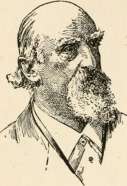
E. HANSLICK
The Boundaries of Music ($2, Schirmer), by A. W. Ambros, is designed as an answer to Hanslick’s work, an opposite view being taken regarding the power of music to express emotions and feelings.
Another well-known and valuable aesthetic work is The Æsthetics of Musical Art, by Ferdinand Hand ($2, Reeves).
Church and Sacred Music
Music in the History of the Western Church, by Edward Dickinson ($2.50 net, Scribners), is practically a complete history of church music. It is catholic and judicial in tone, reveals wide and exact scholarship, is written in a dignified style, and may safely be taken as an authority in its important field.
Suggestive volumes in the same department are J. S. Curwen’s Studies in Worship Music (two vols., $2.75, Curwen), by an experienced English musician, dealing largely with congregational singing and worship in a fair and candid way. Of a similar nature but more practical in its details is Practical Church Music ($1.50, Revell), by J. E. Lorenz, an American church musician, which is a discussion of methods, purposes, and plans and contains valuable counsel and suggestions.
Professor W. S. Pratt, of Hartford Theological Seminary, and a wise and efficient worker in this field for years, has published an admirable volume conveying his experience and entitled Musical Ministries in the Church ($1.25, Schirmer).
The Organ and Organists
One of the most elaborate and complete books on the construction of the organ is Practical Treatise on Organ Building, by F. E. Robertson (two vols., $10, Schirmer).
A smaller work, interesting for its detailed account of the newest modern improvements and innovations, is Modern Organ Building, by Lewis ($3, William Reeves).
Still more compact are two books by H. Abdy Williams in the Music Story Series, The Story of the Organ and The Story of Organ Music (each $1.25 net, Scribners), both enriched by hundreds of pictures and full of facts about the instrument and its music, photographs of celebrated modern organs, and sketches of the great organists of all schools.
Musical Instruments
(see also under piano and under violin)
A standard compendium in this line is Musical Instruments, by Carl Engel ($1.75, Chapman & Hall), a capital handbook by an expert antiquarian. There are also some good illustrations and descriptions of musical instruments in English Music from 1604 to 1904 ($1.25, Scribners).
The most elaborate treatise in English on this topic is Musical Instruments, by K. Schlesinger (two vols., $6, Scribners), with hundreds of authentic illustrations of ancient and modern examples.
Modern orchestral instruments are fully described in several works, namely: Orchestral Instruments and Their Use, by Arthur Elson ($2, L. C. Page & Company); The Orchestral Instruments and What They Do, by D. G. Mason ($1.25, Doubleday, Page & Company); How to Listen to an Orchestra, by Annie W. Patterson ($1.75, James Pott & Co.); The Orchestra and Orchestral Music, by W. J. Henderson ($1.25, Scribners), all excellent treatises and fulfilling well their purpose.
The Opera
The most compact monograph in the operatic field as a whole is The Opera, Past and Present ($1.25, Scribners), by a musical scholar of rare culture and high ideals, W. F. Apthorp, of Boston, which discards biographical details and concentrates attention on the growth and expansion of the various features of the art and the parts played in its development by the different composers.
On an entirely different plan but of unquestionable value in its own wav is Arthur Elson’s Critical History ($1.50, L. C. Page & Company). One of Mr. H. E. Krehbiel’s deservedly popular works is his A Book of Operas ($1.75, Macmillan), which gives, with the author’s abundant familiarity with the theme and trained capacity for literary expression, their histories, their plots, and their music. Another operatic production of his pen is Chapters of Opera ($2.50, Holt), a real contribution to the history of music in New York, Of fine critical quality is The Opera, by R. A. Streatfeild ($1.25, Lippincott), an English writer of high repute, which includes full descriptions of every work in the modern repertory.
In the useful Music Story Series is contained the Story of the Opera, by E. Markham Lee ($1.25, Scribners), which presents a great variety of topics, some of which are not touched upon in other books.
Handbooks to the Opera
Of handbooks and guides to the operas and their plots there is no lack. The oldest and probably the most popular and generally satisfactory is The Standard Operas, by George P. Upton ($1.75, McClurg), now brought out in a much enlarged and superior form.
Other worthy handbooks are Guide to the Opera and its companion volume Guide to the Modern Opera, by Esther Singleton (each $1.50, Dodd, Mead & Company), full of striking and glowing analyses; The Standard Opera Glass, by Charles Annesley ($1.50, Brentano), and The Opera Goers Complete Guide, by Leo Melitz ($1.50, Dodd, Mead & Company), both of which are particularly noted for the very large number of operatic works included in them even though the notices are necessarily much condensed.
The critical works dealing with the Wagner operas would form almost a library in themselves, so we must, perforce, confine our suggestions to a small number. According to many well-informed judges the best all-around book is the Music Dramas of Richard Wagner, by A. Lavignac ($2.50, Dodd, Mead & Company), notable for its clearness, conciseness, and impartiality.
The Legends of the Wagner Drama, hy Jessie L. Weston ($1.75, Scribners), gives accurate knowledge respecting the historic legends on which Wagner based his dramas, and H. E. Krehbiel’s Studies in the Wagnerian Dramas ($1.25, Harper), contains illuminating Wagnerian criticism.
Among the numberless guides to the motifs of the Wagner dramas. The Wolzogen series in several volumes is authoritative (75 cents each, Schirmer).
Oratorio, Cantata, and Choral Music
A single volume covering altogether the subject of oratorio music is called The Story of the Oratorio, by Annie W. Patterson ($1.25, Scribners), and is the most complete and fully illustrated, consecutive, and historical treatment of this art form now available.
George P. Upton’s volumes, the Standard Oratorios and the Standard Cantatas, are now incorporated into his excellent work the Standard Concert Guide ($1.75, McClurg), which gives full sketches of the stories, analyses of the music, and particulars about composers.
Arthur Mees, the well-known musical conductor, has contributed to the Music Lover’s Library a work entitled Choirs and Choral Music ($1.25, Scribners), which practically occupies this field alone, so far as systematic treatment is concerned, and presents the necessary data about choral works, choral societies, and the conducting and management of choirs and choir singing in concise but satisfactory form.
Pianists and the Pianoforte
For piano students there is no more appetising work to begin with than Amy Fay’s Music Study in Germany ($1.25, McClurg). Though issued years ago, it is still widely popular as a fresh and vivid picture of the struggles and the successes of an American student abroad with its lifelike and graphic accounts of the teaching methods of Liszt, Deppe, and other great masters.
On the great virtuosos we find Great Violinists and Pianists, George T. Ferris ($1, Appletons), with its glowing and highly rhetorical sketches of players from Clementi to Paderewski.
A standard reference book is A. Ehrlich’s Celebrated Pianists ($2, Presser), with carefully collected biographical notices of over one hundred and fifty performers, in alphabetical arrangement and with numerous portraits, including sketches of twenty-five noted American pianists.
The lives of the pianists Chopin and Liszt, important in this connection, have been already mentioned in the biographical section of this chapter.
To these we may add the little volume on Paderewski,^ by E. A. Baughan, in the Living Masters of Music series ($1, John Lane & Company; the Autobiography of Rubinstein ($1, Little, Brown & Company).
Possibly, the volume giving most, information to the general reader will be The Pianoforte and Its Music, by H. E. Krehbiel ($1.25, Scribners), in which he has compassed the whole subject in a sound and thorough manner, treating of the instrument itself, the composers of its music, and the great players, giving the typical student or amateur just the sort of information most needed.
A book valued by many is J. C. Fillmore’s Pianoforte Music ($1.50, Presser), with clearly arranged biographical sketches and critical estimates of the schools and composers.
More elaborate volumes are: History of the Pianoforte and Its Players, by Oscar W. Bie ($6, Dutton), embellished with attractive illustrations, and also History of Pianoforte Playing and Piano Literature, by C. F. Weitzmann ($2.50, Schirmer), somewhat formal in style but exact in its facts.
A. J. Hipkins’s Description and History of the Pianoforte ($1.25, Novello) is by an expert on instruments and contains valuable plates showing various historical forms of the instrument.
On the analysis of pianoforte compositions, a subject of growing interest among musical students, there are several books, among them being Descriptive Analysis of Piano Works for Clubs and Program Making, by E. B. Perry ($2.00, Presser); Well-Known Piano Solos, by C. W. Wilkinson (four parts, each 40 cents, Scribners), showing how to play them with understanding, expression, and effect, and Elterlein’s book on Beethoven’s Sonatas ($1.25, Reeves).
On Chopin’s works we can recommend A Handbook of Chopin’s Works, by G. C. Ashton Jonson ($2, Scribners), in which each opus is placed in its proper sequence and followed by lucid explanations and brief critical extracts, forming an invaluable book of ready reference.
We must also refer here to Huneker’s well-known work on Chopin, the Man and His Music, mentioned in the biographical section, which includes masterly analyses of Chopin’s piano compositions.
The Great in Music, by W. S. B. Mathews (two vols., $3.50, Mathews’ Company), is a systematic course of study in the music of classical and modern composers, and is a work of great suggestiveness and practical helpfulness for student clubs. And on the same line is Music Club Programs, by Arthur Elson ($1.25, Ditson), which embraces historical outlines of all nations, schools, and composers, with questions for study.
The Violin and Violinists
The literature on the violin is much larger than that on any other instrument. A peculiar fascination, felt by all lovers of the instrument, attaches to its history. A most valuable collection of books in this division is the Strad Library (about twenty vols., each $1. The Strad, London), covering exhaustively all phases of the instrument, manufacture, playing, etc.
The Story of the Violin, by Paul Stoeving ($1.25, Scribners), is a concise and closely packed brochure, with pertinent facts and abundant illustrations to brighten its pages.
On the old and classic instruments no book stands higher as an authority than that by the English violin maker George Hart, called The Violin, Its Famous Makers and Their Imitators ($6, Dulau & Company), and its companion volume by the same writer, The Violin and Its Music ($5, Dulau & Company).
, On violin manufacture and construction. Heron Allen’s Violin Making as It Was and Is ($3, Scribners) is very thorough and practical, with all kinds of specifications and plans. On a smaller but most useful scale is Broadhouse’s The Violin and How to Make It ($1.50, William Reeves).
On lives of the violinists the reader will find Ehrlich’s Celebrated Violinists, Past and Present ($2, Scribners), though not adapted for consecutive reading, useful for consultation, with its numerous carefully gleaned biographical details.
More vivacious volumes are Great Pianists and Violinists, by G. T. Ferris ($1, Appletons), and Famous Violinists of To-Day and Yesterday by H. C. Lahee ($1.50, L. C. Page & Company).
Among the many technical works on violin playing we may mention Technics of Violin Playing, by Carl Courvoisier, a well-known authority ($1, The Strad); Chats to Violin Students, by G. C. Corrodus ($1, The Strad); True Principles of Violin Playing, by George Lehman ($1, Schirmer); and Catechism of Violin Playing, by C. Schroeder ($1, Augener), all the works of acknowledged experts in the field.
The Voice and Singing
It is impossible to give here any account of the numberless voice methods of varying degrees of excellence, and only a few of the most famous books which have been tested by time and experience can be cited. Among these are Voice, Song, and Speech, by Brown and Behnke ($2, Putnams), two noted London specialists; The Hygiene of the Vocal Organs, by Dr. Morell Mackenzie ($1.25, Werner); How to Sing, by Lilli Lehman ($1.50, Macmillan); Hints on Singing, by Manuel Garcia ($1.50, Schuberth); The Philosophy of Singing, by Clara Rogers ($1.50, Harpers); The Art of the Singer, by W. J. Henderson ($1.25, Scribners), a book of general all-around interest; and a host of others.
On the literature of songs there is a delightful little account by H. T. Finck called Songs and Song Writers ($1.25, Scribners), filling a niche all by itself and aptly called “a song Baedeker,” so crowded and crammed is it with good things.
The lives of great singers is a subject of vivid interest to many and there are two small volumes by George T. Ferris, entitled Great Singers (two vols., each $1, Appleton), written with literary colour and charm.
Henry C. Lahee’s Famous Singers of To-Day and Yesterday ($1.50, L. C. Page & Company) gives carefully gathered information.
The life of the celebrated voice teacher Madame Mathilde Marchesi, called Marchesi and Music ($2.50, Harpers), though marred by egotism, abounds in interesting passages.
Especially attractive is the story of the renowned Garcia, the inventor of the laryngoscope, who lived to the great age af one hundred and knew personally every great musician of three generations, called Garcia the Centenarian, and His Time, by M. S. Mackinlay ($4, Appletons).